
In early April, a friend and I set out to hike Acrocorinth Castle.
We grabbed a coffee in Ancient Corinth, parked right by the castle gate, and spent the next few hours hiking one of the most breathtaking and historic sites in the Peloponnese.

Why hike Acrocorinth? Because it is a wonderful hiking experience! The fortress sits high on a massive, steep rock above the ruins of Ancient Corinth, and the 360° views from the top are absolutely stunning.
Here’s everything you need to know to enjoy it too!
This post includes links that may be affiliate links. If you choose to purchase them, I may earn a small commission at no extra cost to you. Please see my disclaimer/privacy policy for more information.
My Latest Video on Hiking Acrocorinth Castle
An exciting day exploring the large castle of Acrocorinth in the Peloponnese, the sites, and the seafront tavern in modern Corinth.
Hiking Acrocorinth Castle | Trail Breakdown

You can hike from Ancient Corinth to the castle (distance 2.8 km/ 1.74 mi) only if the weather is cooler.
The terrain is quite bare, with very few trees, so going uphill in the heat of a Greek summer with no shade is a recipe for heatstroke.
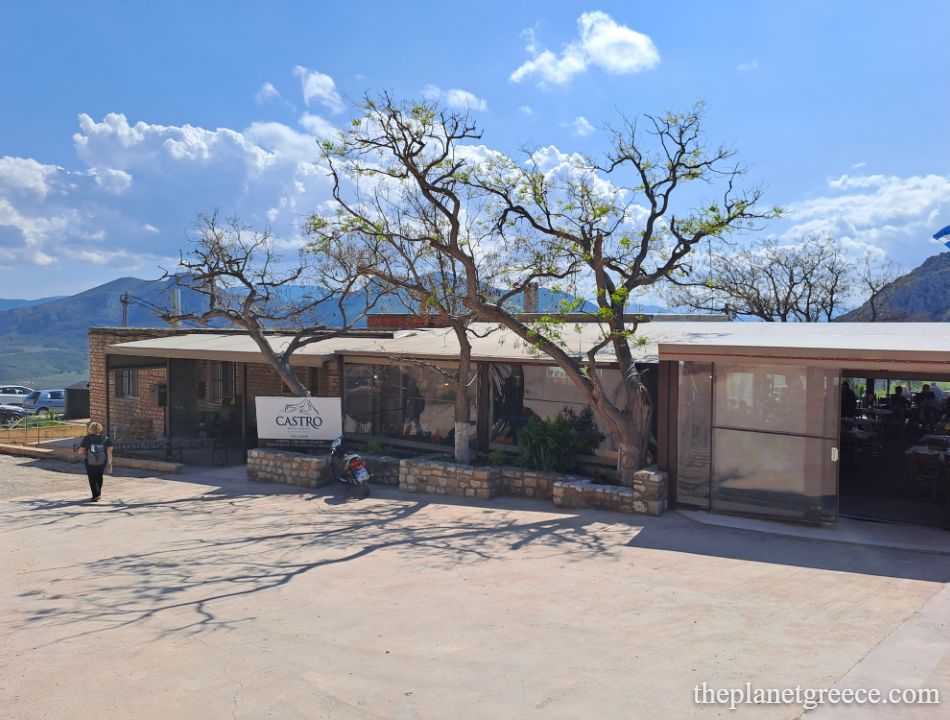
We chose to drive and left the car in the designated parking area right across from the newly renovated cafe-restaurant, where you can rest after you visit the castle.

There’s no set trail distance at Acrocorinth, but since the walls stretch about 3 kilometers and there are plenty of monuments inside to explore, expect to walk anywhere between 3 and 6 km, depending on how much you decide to see.
Acrocorinth is not just a natural fortress—it’s a layered stronghold with three successive defensive walls, each built to protect the inner parts of the castle as invaders moved uphill.

From the moment we passed through the first Gate, the cobblestone path began to climb steadily.
You are surrounded by ancient ramparts designed with clever openings for both archers and artillery, as well as beautiful wildflowers, which were in full bloom as we visited in mid-spring.

The trail continues steadily uphill toward the upper levels, and we ascended through the second and third Gates, pausing often to take photos.

Honestly, it’s impossible not to—each step brings even more breathtaking views.

Just past the third gate, you reach a large plateau where you have to decide which direction you would like to choose.

On your left, you’ll see the 17th-century Church of Agios Dimitrios (9), and on your right, there’s a Mosque (12).
We decided to check out the northern walls first and planned to stop by the Mosque on the way back.
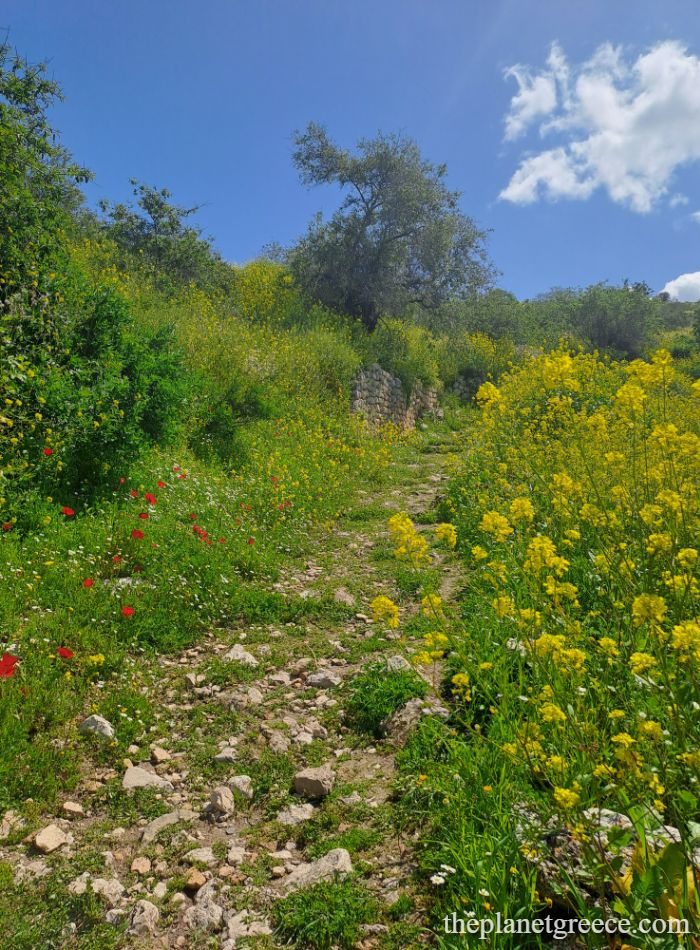
The trail went uphill, but it wasn’t hard at all. The path was rocky, with beautiful wildflowers all around.
I have to admit, the buzzing bees made me a little nervous, but I came prepared with ammonia sticks, just in case anyone got stung.

When we reached the northern walls of Acrocorinth, the view completely stole the show—rolling hills, endless sky, and Corinth and the sea stretching out below.
The walls themselves were massive and impressive, standing strong for centuries.

Reluctantly, we headed back toward the Ahmed Pasha Mosque. I knew it was in ruins, but I’ve always had a soft spot for religious relics of all kinds.
There were once four mosques in Acrocorinth, and this one was built in 1715, after the Ottomans recaptured the fortress for the second time.

We couldn’t visit it inside, so we continued to the next monument, which is a Byzantine cistern.
This is quite close, perhaps less than 100 meters, but it is another great spot for relaxation and more photos.
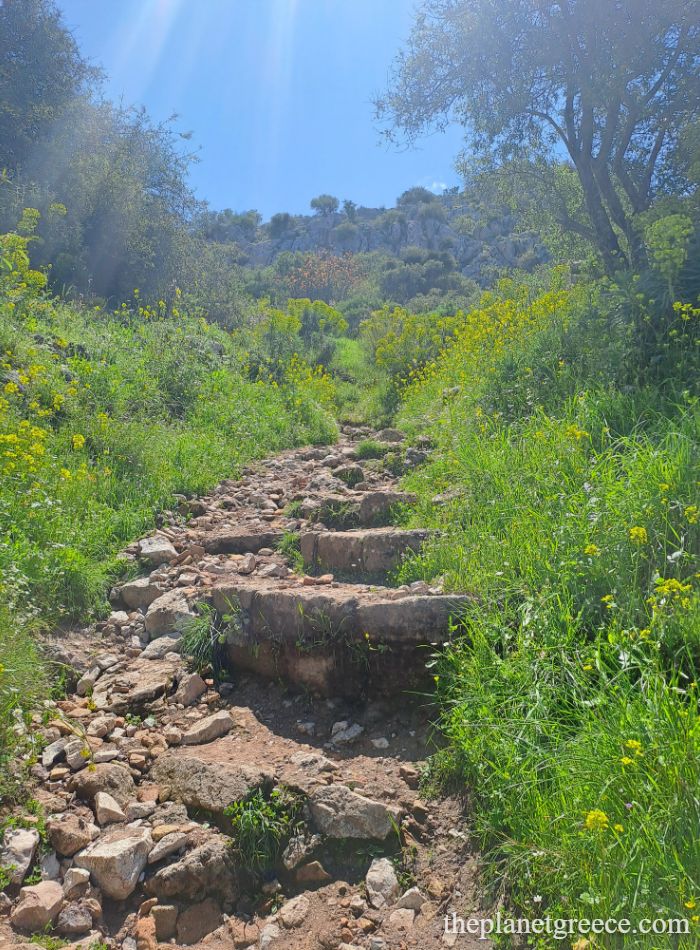
From there, we followed a slightly steep, rocky trail that led uphill to the upper parts of the castle.
It was a bit of a climb, but the path was beautiful and totally worth it for the views and the sense of adventure.

The trail brought us to a crossroads with a few choices.
To the right was the Frankish Tower, straight ahead was the ancient Upper Peirene Fountain, and to the left, the path led to the highest point of Acrocorinth—where the ruins of the Temple of Aphrodite once stood. Choices…

We decided to head first to the ancient Greek monument that I had read so much about but had never managed to visit.
The Upper Peirene Fountain in Acrocorinth is a remarkable example of ancient engineering. Carved deep into the rock, this massive underground water system once supplied the fortress with fresh water.
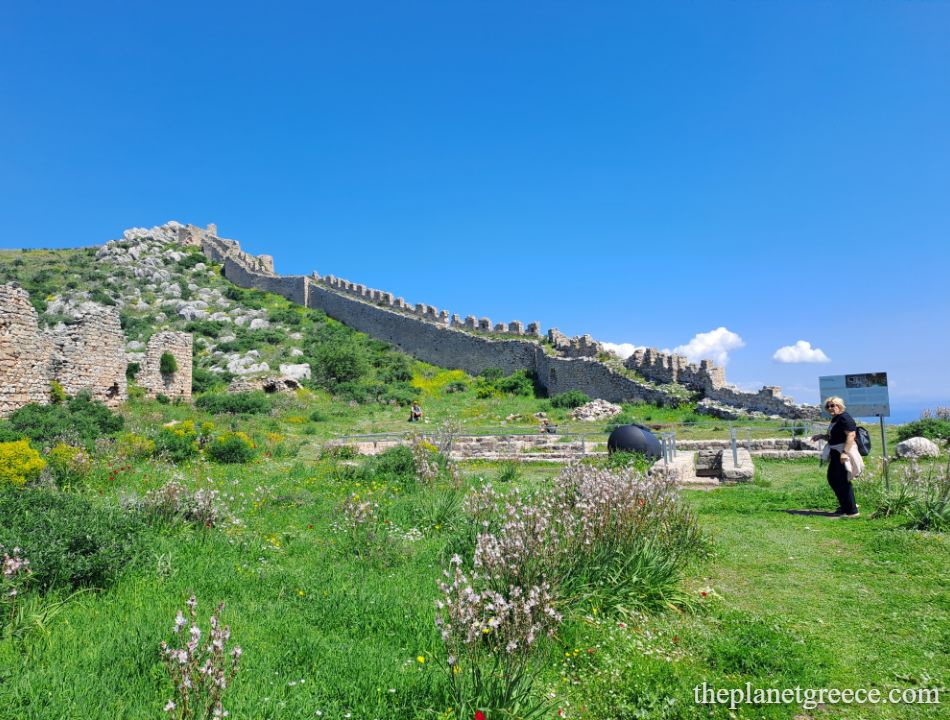
Walking around it, you can still see the arched entrances and stonework. It’s quiet, cool, and full of history—one of those hidden gems you don’t expect to find.
The most amazing thing is that it still has water. There’s also a lower Peirene Fountain down in Ancient Corinth, but this one feels more hidden and mysterious.
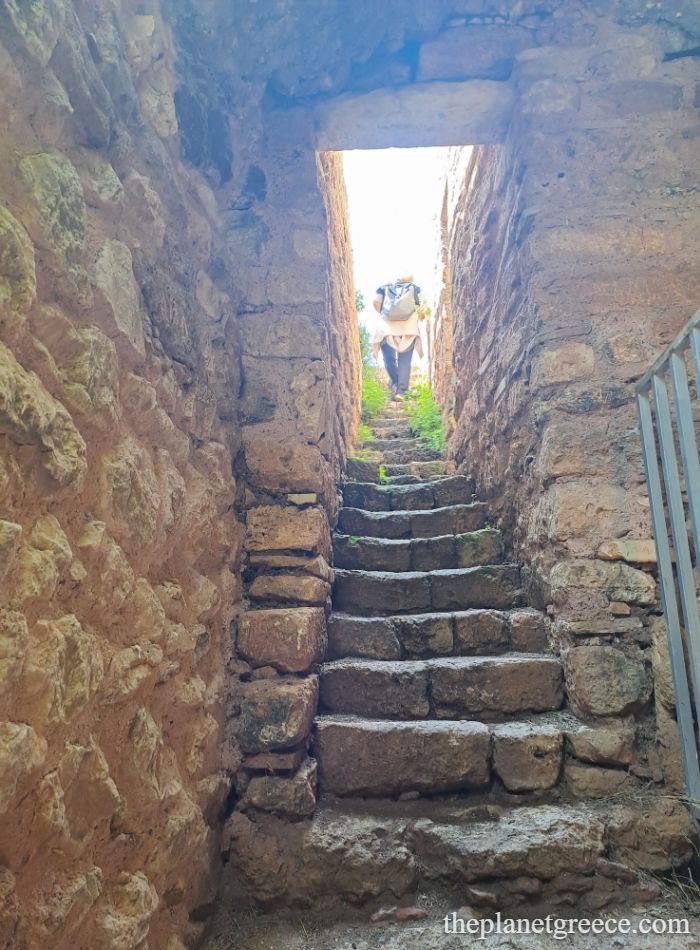
Peirene was a nymph who had two sons, Lecheas and Cenchrias (the two ancient ports of Corinth).
When Artemis accidentally killed her son Cenchrias, Pirene was overcome with such deep sorrow that she wept until she became the fountain that now stands outside the gates of Corinth.

The Corinthians later built a small sanctuary by the fountain, where they offered honey-cakes to Peirene during the dry summer months.
Right next to the cistern, you will see the Northeastern Walls of the castle climbing uphill.
We didn’t go this direction because we were afraid that we would not have enough time, and we were right – so if you get to Peirene, I believe it will be quite amazing to hike next to the walls.

Instead, we turned back to the initial crossroads and walked toward the southwestern Frankish Tower.
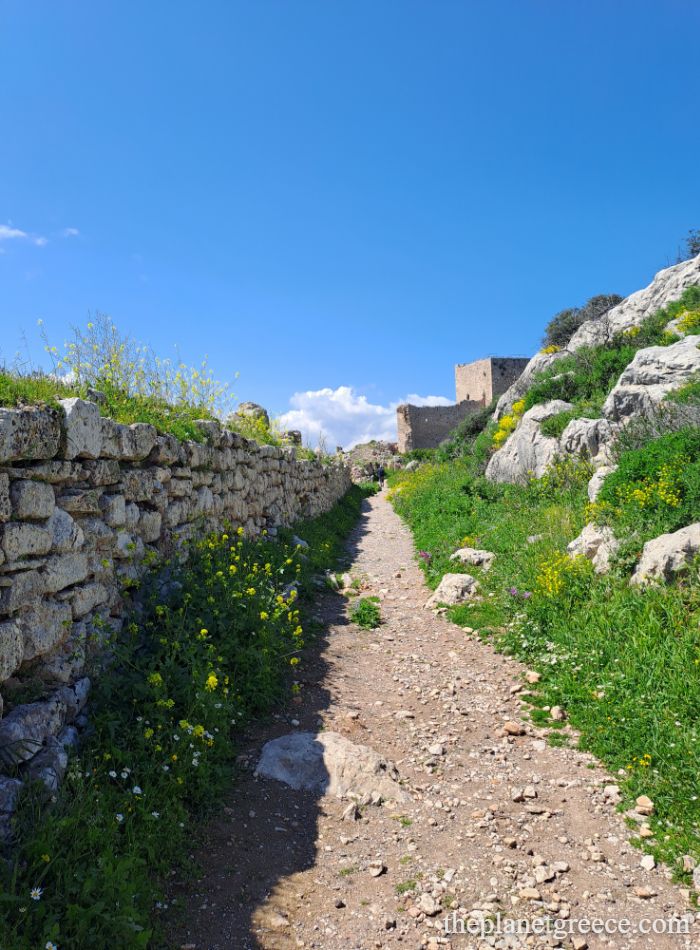
The trail is easy, winding past old cannon holes in the walls and surrounded by wildflowers.
At one point, you climb a few steps that take you to an incredible view of the walls of Acrocorinth, the valley and the Corinthian Bay.

I paused there for a bit—birds were flying around and singing, and it was just peaceful.
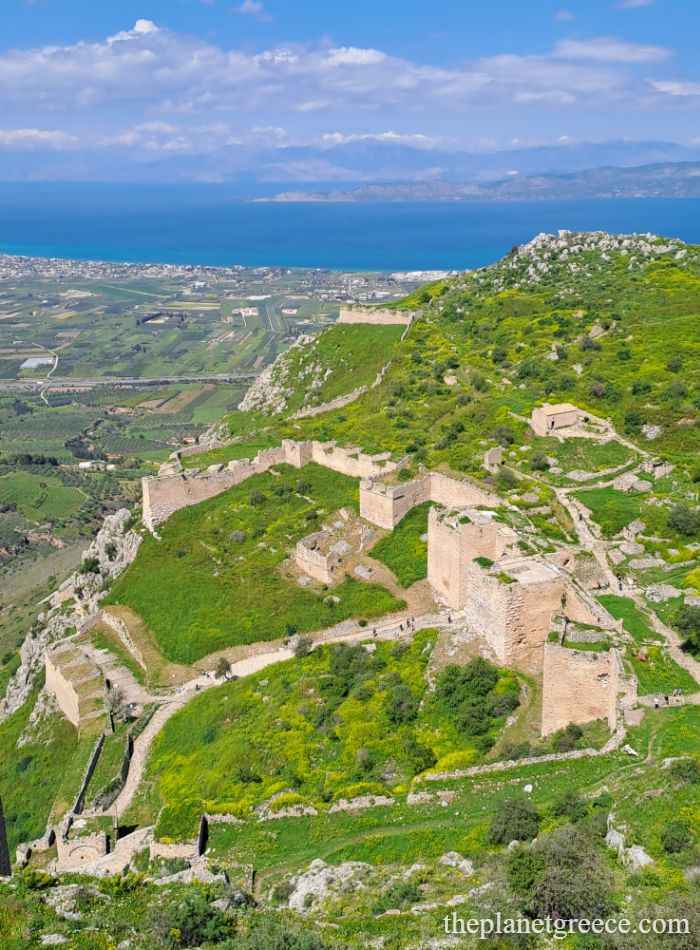
The Tower took its name from Prince William of Villehardouin, the leader of Achaia (a region in Peloponnese) between 1246 and 1278, who also built here at this beautiful corner of the castle, a palace.


The tower is rectangular with an underground cistern covered by a barrel vault and internal rooms.
Although the tower in its present form was mostly built during its Ottoman period, on its masonry, you can see traces from its Byzantine years.
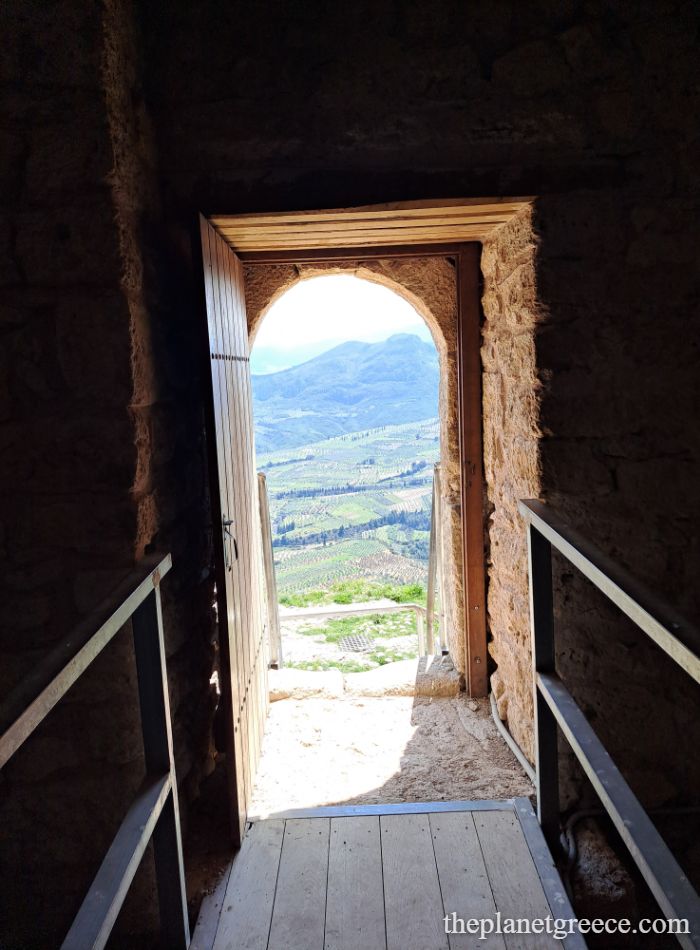
We rested for some time, but as the clock was ticking – the castle closes at 15.30 – we hurried to our last destination of the day, the peak of Acrocorinth at 563 meters.
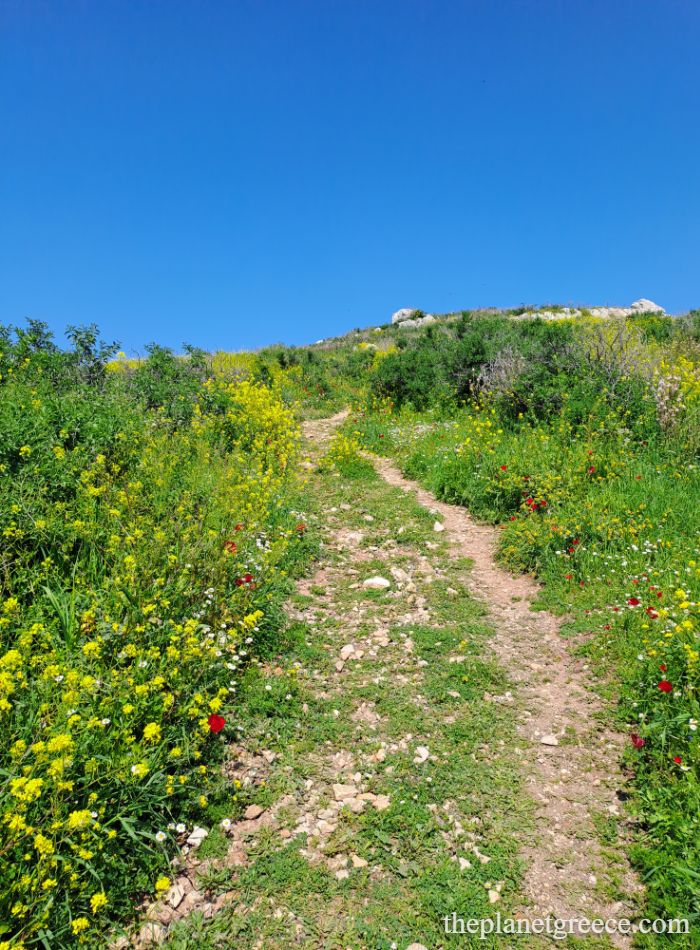
We made our way back (once again!) to the crossroads, but this time we started heading uphill to the ruins of Aphrodite’s Temple.
Just a heads-up—this was definitely the steepest and most challenging part of the hike.
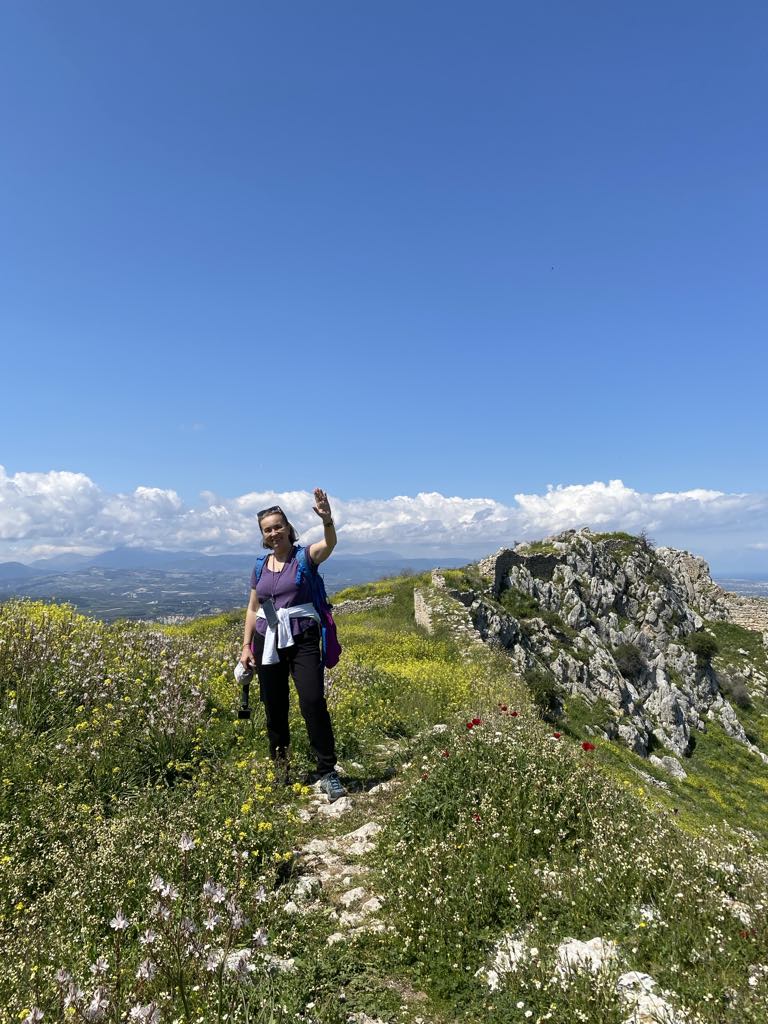
If you’re visiting in the summer, it could feel pretty tough in the heat, so be sure to wear a hat, bring water, and take your time.
There is literally not a single tree on the way up, just low bushes.

The story around this temple says that 1,000 beautiful women, dedicated to Aphrodite, the goddess of love, lived and served here as sacred companions.
The priestesses of Aphrodite had a big impact on the city’s economy and politics back then.
During tough times, they would come together and pray for the city’s safety and well-being.

Legend has it that when Xerxes and the Persians were coming to take over Greece (with battles in Thermopylae and Salamina), the priestesses in Corinth climbed to the top of Acrocorinth and joined in prayer, hoping to protect their land.

The views from up there were absolutely breathtaking—360 degrees of the Peloponnese, the sea, and the open sky.
But we had to start heading down, since it was already past 3:15, and just as we began, the sirens went off, signaling it was time to leave the site.
We took a different path down, one that was covered in wildflowers. It was a bit of a rushed exit, and I nearly slipped on the smooth cobblestones—but all was good!
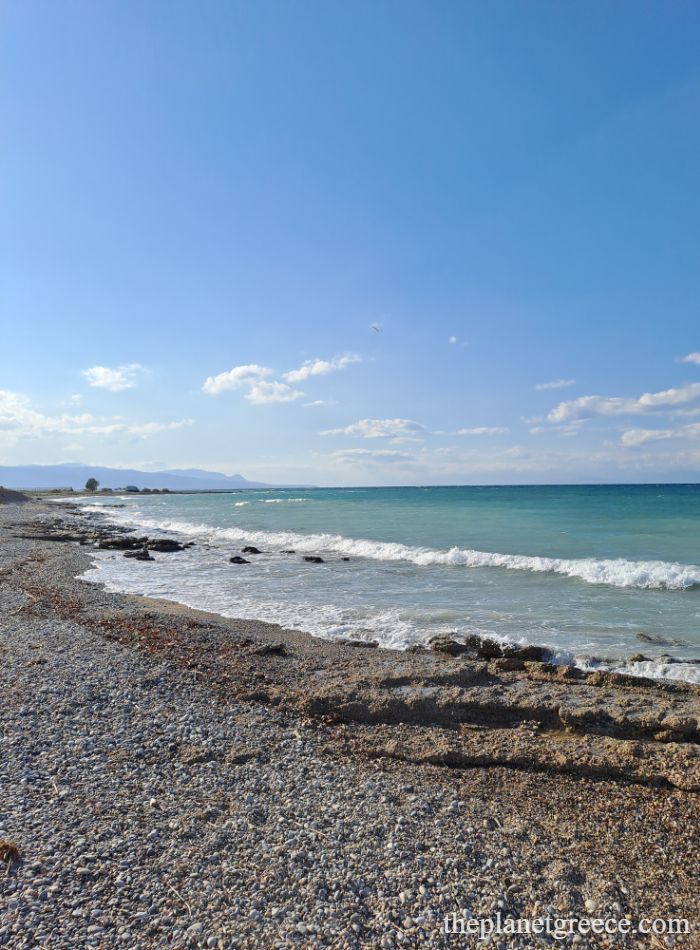
We later had lunch by the sea at the tavern Vounalakia in front of the ruins of Lechaion port in Corinth.
All in all, it was a fantastic hike and a great day exploring one of the best-preserved acropolises in Greece.
Tip: If you are staying in Loutraki or Corinth, you shouldn’t miss the stunning coastal trail from Sterna to Melagkavi lighthouse in Perahora.
Things to know before hiking Acrocorinth – FAQs
When is Acrocorinth open, and is there an entrance fee?
The site is open from 8.30 a.m. to 3.30 p.m. every day, except on certain Greek public holidays, with a free entrance.

Where is Acrocorinth?
Acrocorinth is located in the northeastern Peloponnese, about 91 km (56.5 miles) southwest of Athens and just 7.5 km (4.6 miles) from Corinth.
What is the terrain like?
Acrocorinth’s landscape is a mix of rugged and smooth terrain.
The steep slopes and rocky cliffs are made of Jurassic limestone, while the gentler areas are mostly newer clay soil. This combo has created natural springs over time, like the well-known Peirene Spring.
Because the land’s been grazed for centuries, you’ll now see a blend of wild Mediterranean scrub, scattered pine trees, small olive groves, and low bushes.
If you visit in spring, the hillside comes alive with colorful wildflowers—especially different varieties of campanula.

What kind of wildlife can you see at Acrocorinth?
The castle is home to a wide range of wildlife, especially birds and reptiles. You’ll spot birds like kestrels, crows, swallows, jackdaws, buzzards, and even the impressive short-toed snake eagle.
As for reptiles, the area is home to species like the worm lizard, sand boa, vipers, and several types of turtles.
Are there hiking signs in the castle?
You won’t find official hiking trail signs at Acrocorinth, but the monument signs along the way do a decent job of pointing you in the right direction. The signs on-site are in both English and Greek.
Are there any facilities/ water/ food on-site?
No, there is no toilet, water source or any food inside the site, but you can buy a bottle/snacks at the cafe near the entrance.
What other monuments can you visit in the area?
There’s a lot more to see around Acrocorinth! Just below the hill, you’ll find Ancient Corinth, one of the most important city-states of the ancient world, with impressive ruins like the Temple of Apollo and the Roman forum.
Not far from there is the famous Corinth Canal, a dramatic man-made cut that connects the Aegean and Ionian seas—it’s especially cool to see from above.
A short drive east takes you to Isthmia, home to a sanctuary dedicated to Poseidon and one of the lesser-known but fascinating ancient stadiums.
And if you’re up for some wine and history, head to Nemea, known both for its archaeological site and its world-class wineries. The ancient stadium and temple are surrounded by beautiful countryside.
Where’s the best place to stay near Corinth?
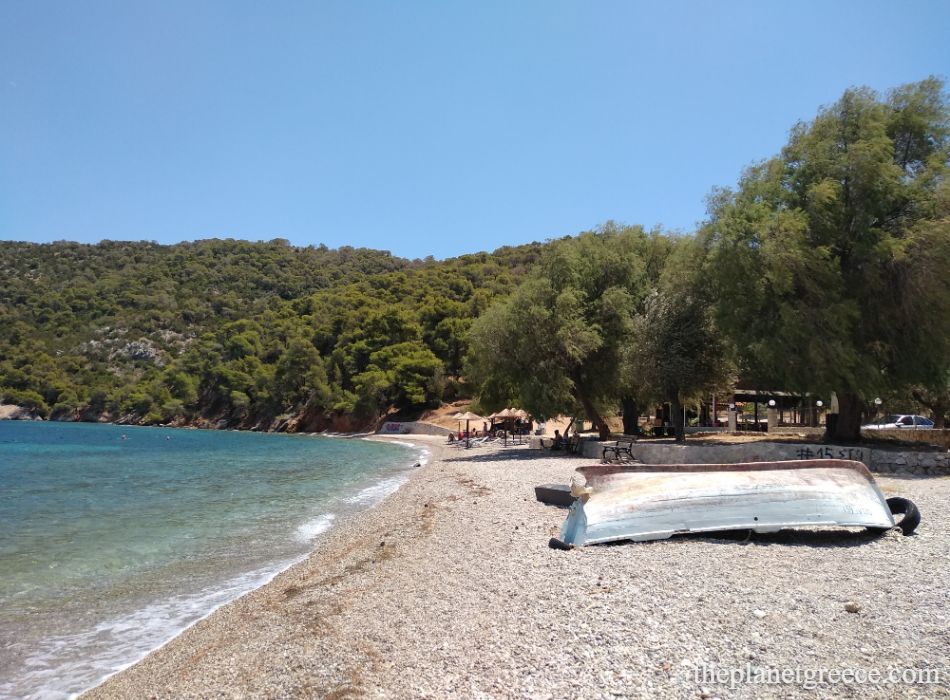
Consider staying in Loutra Oraias Elenis, a seaside village in Isthmia named after Helen of Troy, who was said to have bathed here.
It’s peaceful, close to both Corinth and the ancient sites, and known for its natural spa waters.
Two of my favorite hotels in Loutra are the seafront Mirella Studios and
The House of Gratitude – Poolside Retreat.
How to get to Acrocorinth from Athens?
The easiest way to reach Acrocorinth from Athens is by car—it’s about a 1.5-hour drive via the Athens-Corinth highway.
Just follow the signs to Ancient Corinth, then head up to Acrocorinth from there. If you’re using public transport, take the suburban train or a KTEL bus to Corinth, then grab a taxi to the site.
When is the best time to hike this trail?
I’d avoid hiking Acrocorinth between June and September—it gets seriously hot, and there’s almost no shade.
If you are visiting in the summer, try to start your hike as early in the morning as possible to beat the heat.
What gear should I bring?
I didn’t use hiking sticks, and I wore my old hiking shoes. Also, try to wear shoes with a really good grip—the rocky paths can be slippery, especially on the way down.
How long does the hike take?
It took us about 4 hours, but we did make a lot of stops.
Is this hike for me?
If you’re reasonably active and comfortable walking uphill on rocky paths, you’ll be just fine. The hike isn’t technically difficult, but it does involve uneven terrain, some steep climbs, and lots of cobblestones.
It’s not ideal for small kids, strollers, or anyone with limited mobility. Take your time, wear good shoes, and you’ll enjoy it—even if you’re not a seasoned hiker!
Popular Trails in Greece
Hiking in Greece is such a treat!
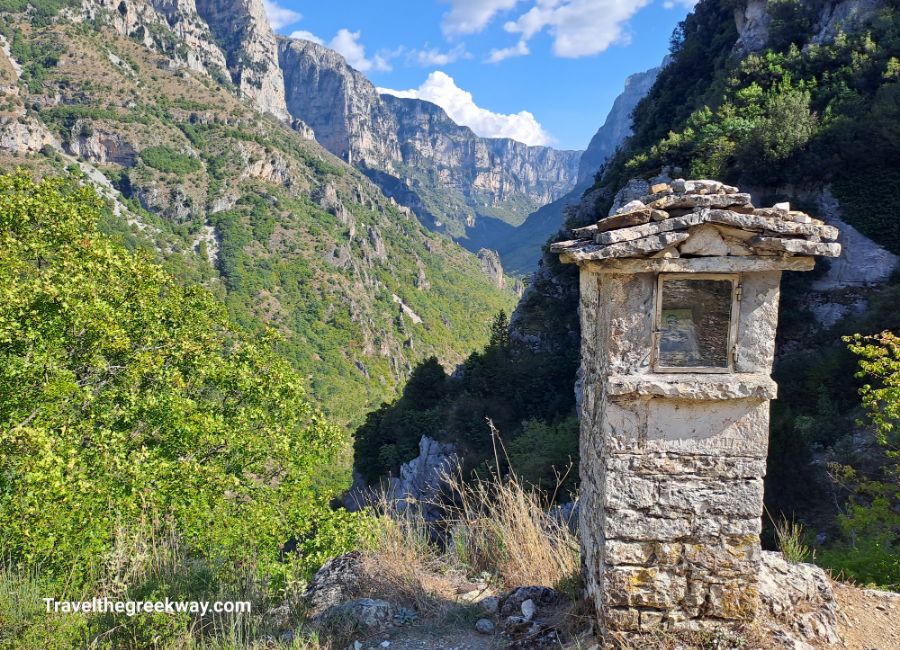
Whether you’re into the wild mountains of the north—like the Pindus range, Mt. Olympus, Vikos Gorge, or Meteora—or you’re exploring the Peloponnese with spots like the Menalon Trail, Taygetus, or Vouraikos Gorge, there’s no shortage of amazing scenery.
And don’t forget the islands! Their coastal trails come with killer views of the Aegean and Ionian Seas. It’s a dream for anyone who loves to hike.
Final Thoughts on Hiking Acrocorinth
Acrocorinth is the perfect mix of exploring ancient ruins, wandering through wildflowers, and soaking in 360° views of the Peloponnese. Just take it slow, wear good shoes, and don’t forget your camera—you’ll want to capture every minute.
Have you been to Acrocorinth, or is it on your list? Drop me a comment—I’d love to hear about your experience!
Join Our FB Group & Subscribe to My YouTube Channel!
For more travel to Greece tips and beautiful destinations in the Greek islands, please join my FREE Facebook Group or SUBSCRIBE to my YouTube & TikTok channels for amazing videos of Greece! Until then, happy and safe travels, Evgenia.
Essential Greece Traveling Tips
- ‘Hello’ and ‘Thank You’ in Greek: “Ya sou” and “Efharisto”
- Emergency Numbers Anywhere in Greece: AMBULANCE 166 – FIRE 199 – POLICE 100– EMERGENCY NUMBER 112
- Athens Metro Website (timetables and ticket info)
- Trains (Hellenic Train)
- Public Buses KTEL
- Booking.com: I use Booking.com because I can get the best deals on hotels and apartments, free cancellations, and great prices!
- Rent an Affordable Car in Greece
- Get Your Guide: For all your day or multi-day tours and city guide needs, I use Get Your Guide
