
On our third day in Paiko, we took a tour of Goumenissa, exploring the town center, and embarked on a short hike to a beautiful spot called Dipotamos (central Macedonia).
Here, two small rivers converge, cascading down a waterfall and forming a small artificial lake thanks to a dam.
This location, known as Dipotamos (‘two rivers’), is a popular swimming spot for the locals of Goumenissa during the summer.

After the hike, we walked on the asphalt road to the winery of the Aïdarini family for a visit and a wine-tasting session.
Unfortunately, we were there on a rainy winter day, but that wasn’t a big surprise, as we hiked last January, where cold and rain are expected.
Info: Paiko is a small mountain range located northwest of Thessaloniki, approximately 20 km in a straight line from the border with North Macedonia.
This post includes links that may be affiliate links. If you choose to purchase them, I may earn a small commission at no extra cost to you. Please see my disclaimer/privacy policy for more information.
Paiko Dipotamos Article Information
In this post, you will find information on a tour in the center of Goumenissa, the area’s history, a breakdown of a short hike to the Paiko Dipotamos area, and info on the Aïdarini winery. If you are interested in reading about our first and second days on Paiko Mountain, please check the articles below:
Technical information for the Dipotamos hike

- Trail: 8 km.
- Elevation: From 120 m to 270 m, Elevation gain/loss: 150 m
- Total Time: About 3.10 hours, including breaks.
- Level of Difficulty: Easy.
- Terrain: Mostly asphalt road with shorter parts of earth road and a small rocky part around the Dipotamos area.
- Best time to hike: All year round. In the summer, you can swim in the artificial lake.
- Participation Requirements: Not demanding. In case of rain, you may need to walk on muddy terrain.
- Gear: Ηiking boots or shoes and clothing corresponding to the weather conditions.
- Water: You will not find any water source on the trail. So, take enough water with you according to the season.

Starting from the town centre, take a westward direction and turn left after the Town Hall (ΔΗΜΑΡΧΕΙΟ).
Just before the last houses turn left at Sarantaporou (ΣΑΡΑΝΤΑΠΟΡΟΥ) street and then turn right at the first street Ano Vodenon (ΑΝΩ ΒΟΔΕΝΩΝ).
You will shortly arrive at the town limit. Take the road to your right and follow it as it turns left, taking a NE direction.
At 200 m and 900 m approximately, after having reached the town limit, you will find a Y-shaped crossroads.
Take, in both cases, the left direction. At 1,4 km after the town limit, the road makes a U-turn and takes a WSW direction.
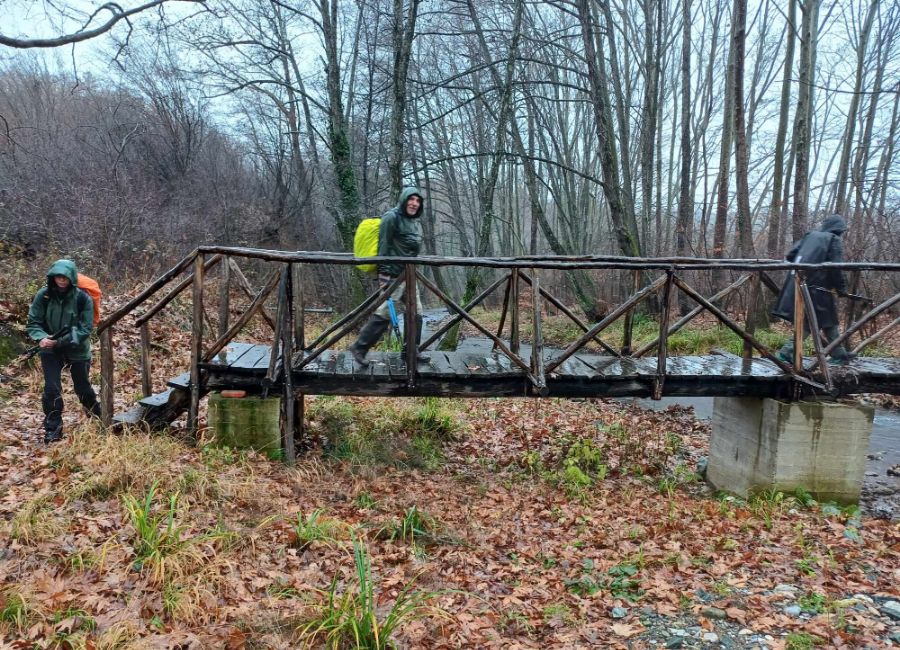
Shortly after this point, you will be walking close to a stream, which you will cross on wooden bridges, on two or three occasions.

After the last bridge, you will join a larger road, which eventually will take you to the asphalt road leading to the Dipotamos area.
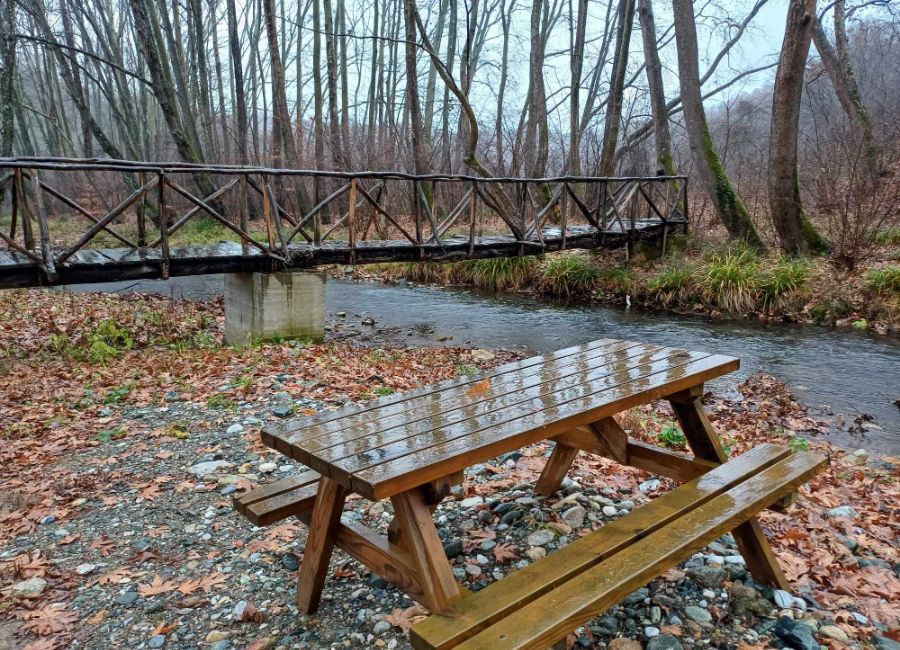
To your right, you will see a small cascade and the lake. To your left, there are a few tables and benches under the shade of the trees.
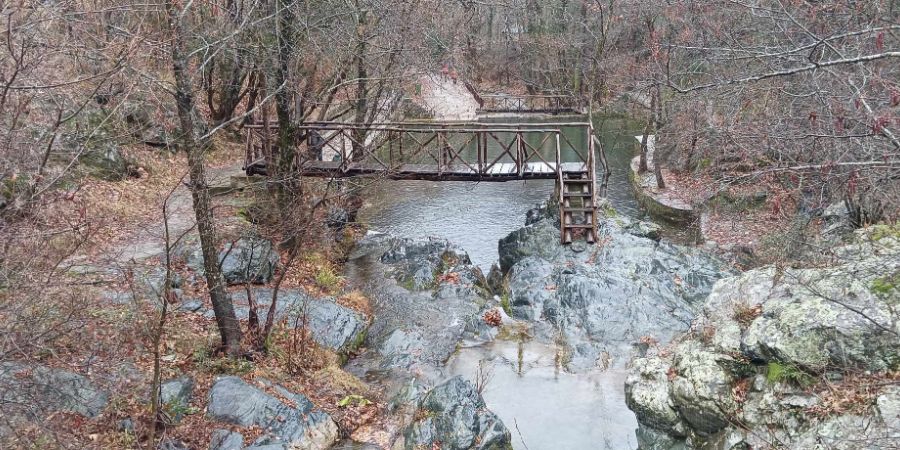
You may then return to Goumenissa, taking the asphalt road for less than two km, to the town center.
Once back in Goumenissa, we continued along the main road without detours.
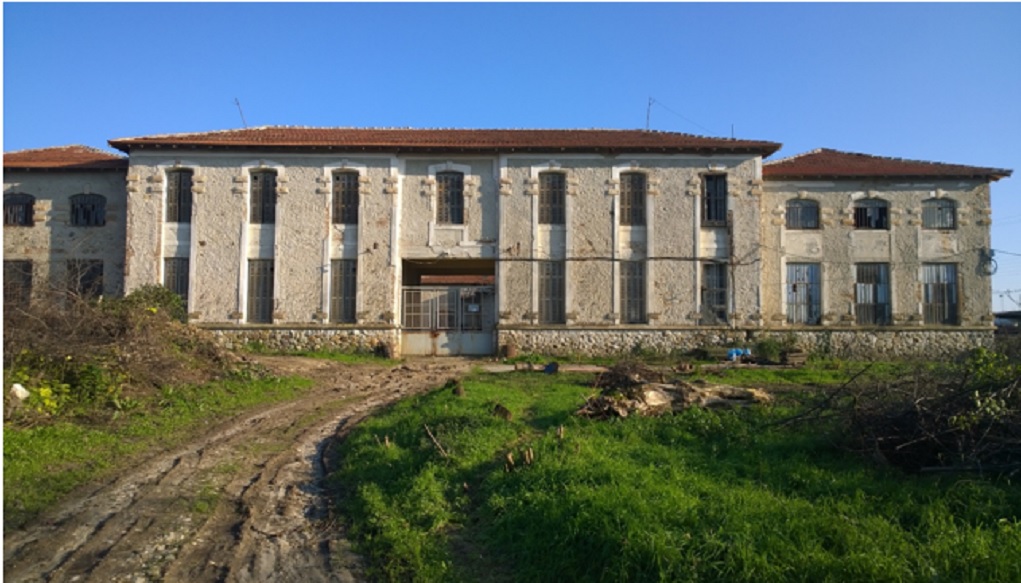
We turned left approximately 600 meters past the Town Hall, shortly after a gas station and after having passed in front of a sizable industrial structure that once operated as a silk yarn factory, employing over 400 individuals until 1980.
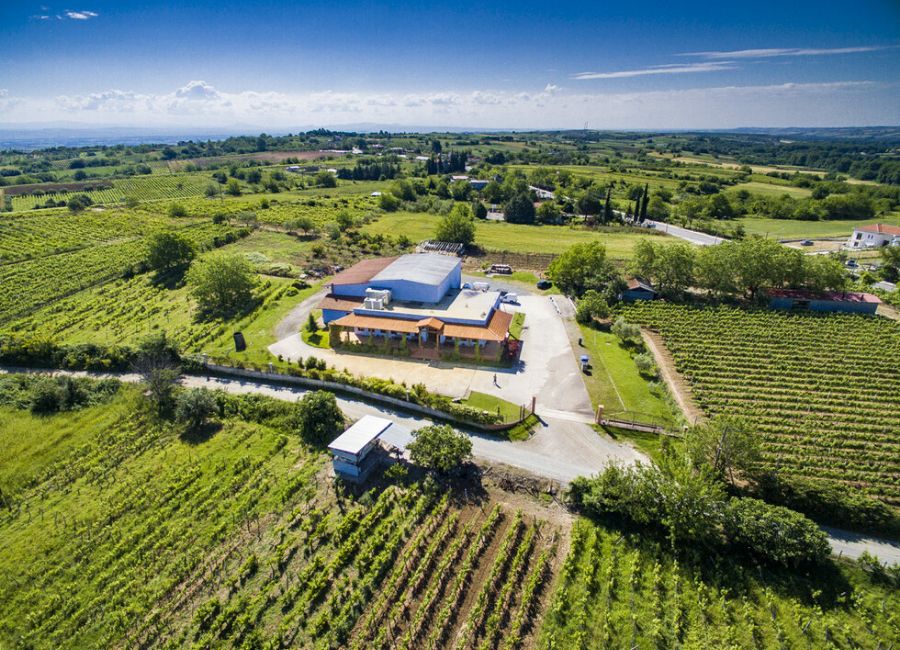
After leaving the main road, we proceeded for another 200 meters to reach the Aïdarini family winery.
During the guided visit, we learned that the grape yards of Goumenissa used to cover 2.750 acres in the early 20th century but were drastically reduced after the phylloxera epidemic of 1917.
The present acreage is just half of what it used to be a century ago.
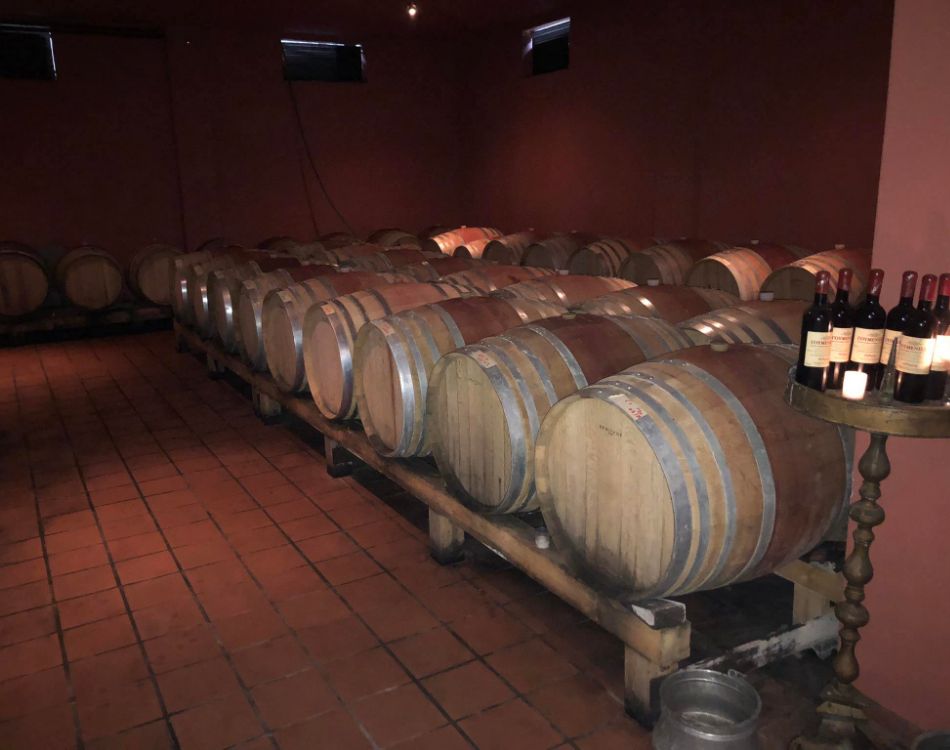
The region produces various white and red wines using both foreign varieties (Sauvignon Blanc, Merlot, Syrah) as well as Greek (Malvasia, Assyrtiko) and local ones (Xinomavro and Negoska).
There are seven wineries in or close to Goumenissa that you can visit after prior notice.
Wikiloc Map for Paiko Dipotamos

Here is the Wikiloc recording of this day’s hike named “Goumenissa Day 3 – Dyo Potamia (Two Rivers)” (or Paiko Dipotamos Trail).
Where to Stay in Paiko
We lodged in Goumenissa, a charming town nestled at the base of the mountain. With a population of 4,500 residents, Goumenissa is celebrated for its fine wines, pristine waters, tsipouro, and globally acclaimed traditional brass bands.

There are very few accommodation options in the area. We stayed at Dimosthenis Hotel (budget, family-friendly) which is a popular hotel.
If it is fully booked, you can also try Dallia Loft Space (mid-range, family-friendly) in Goumenissa. At nearby Polykastro village, there are two nice hotels: Park Hotel Polykastro (budget, family-friendly) and Hotel Astro (budget, family-friendly).
How to Get to Paiko

You will need a rental car if you are traveling to Paiko from Athens.
If you’re heading to Thessaloniki (504 km), taking the national road is your best bet. About 20 km before hitting Thessaloniki, just past the toll booths near Chalkidona, hang a left towards the Evzones customs.
Or, if you’re up for a scenic route, take a left at the Kilkis junction, passing through Polykastro and Axioupoli until you reach Goumenissa.
Exploring Goumenissa’s Sites – Historical Background
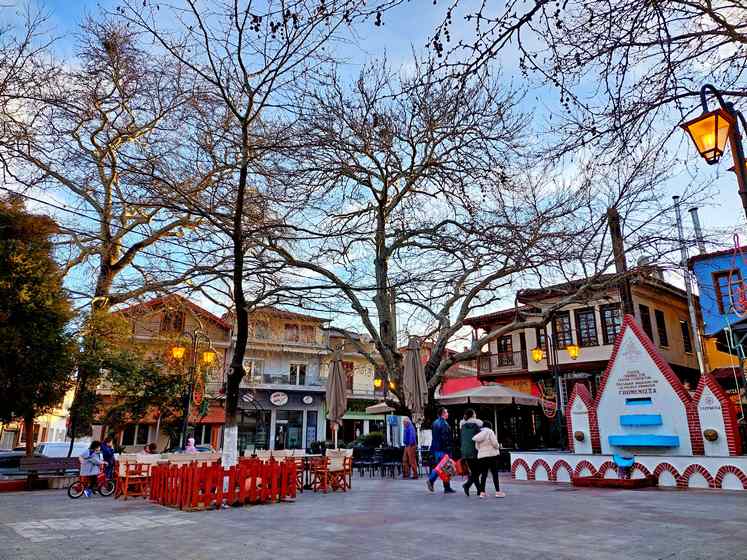
Goumenissa was founded in the Byzantine times and was conquered by the Ottomans in 1387. Its inhabitants were awarded the duty to provide fabrics for the Ottoman army uniforms.
This conferred privileges and skills to the town, which, especially in the 19th century, became an important, trading, manufacturing, agricultural (including an important sericultural activity), and religious regional center.

Goumenissa was also known for its wines that were exported as far as Central Europe.
In the late 1800s and early 1900s, tensions grew between Greeks and Slavs over who would control the region as the Ottoman Empire weakened.
By 1903–1908, it turned into armed clashes, quietly backed by Greece and Bulgaria. To support the town’s Greek identity, locals raised funds to open a large Greek school in 1894.
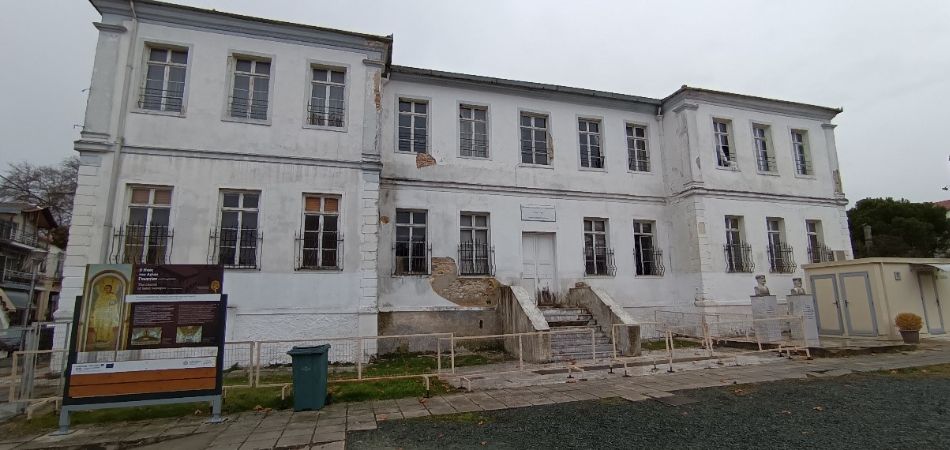
Eventually, the Greek army conquered the town in 1912, during the Balkan Wars. During WWI, Goumenissa became the base of the French army on the Macedonian front.

Before leaving, the French built a fountain in the town’s central square, inscribed in Greek and French, “Remember the French soldier”.
During our town tour, we visited the two main churches: Saint George and the Assumption of the Virgin Mary.
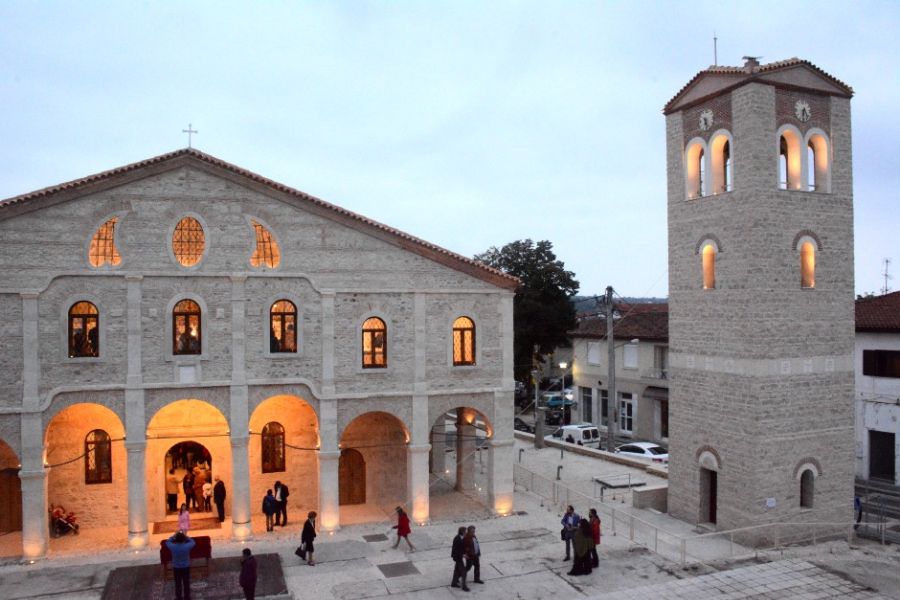
Saint George is a large metropolitan church, built with the voluntary work of the town inhabitants from 1863 to 1869. It shares the same courtyard as the school already mentioned.
It is a 3-aisled basilica, with a wooden roof, featuring a Π-shaped portico, decorated with wall paintings and remarkable wood-carved furniture. During WWI, the church served as a hospital for the French army.
The second church is devoted to the Assumption of the Virgin. This is the older church of the town, built in 1802, as a 3-aisled basilica with a wooden roof, to which a portico was added to the west and south sides in 1837.
No use of electricity is made in the church, thus conferring a mystic ambiance to the service.
Top Spots for Hiking Adventures in Greece

Hiking in Greece is a blast! You’ve got everything from the wild northern Pindus mountains, Olympus, Vikos Gorge, and Meteora to the Menalon Trail, Taygetus, and Vouraikos Gorge in the Peloponnese. And don’t forget the killer island trails with views of the Aegean and Ionian Seas. It’s a hiker’s dream come true!
What are you waiting for? Pack up and discover Greece through hiking!
Did you hike to Paiko? Let me know what you think about the mountain in the comments, I’d love to hear whether I managed to get it onto your bucket list!
*Some of the links in this post are affiliate links. That means I may make a commission if you click and buy. The commission comes at no additional cost to you.
Essential Greece Traveling Tips
- ‘Hello’ and ‘Thank You’ in Greek: “Ya sou” and “Efharisto”
- Emergency Numbers Anywhere in Greece: AMBULANCE 166 – FIRE 199 – POLICE 100– EMERGENCY NUMBER 112
- Cheap Flights to Greece
- Athens Metro Website (timetables and ticket info)
- Map of Athens Metro
- Trains (Hellenic Train)
- Public Buses KTEL
- Booking.com: I use Booking.com because I can get the best deals on hotels and apartments, free cancellations, and great prices!
- FerryScanner to book ferries to the Greek Islands
- Rent an Affordable Car in Greece
- Get Your Guide: For all your day or multi-day tours and city guide needs, I use Get Your Guide

Hello Joseph, very nice to read your experience! Just a few weeks ago I ‘found’ the area for the first time, went there with my mother and really liked it. Do you live in Greece? Kind regards, Lizette